
“Orthodox Theology in the Public Sphere: Reclaiming a Credible Public Voice”
Volos, Greece, October 23-24, 2026
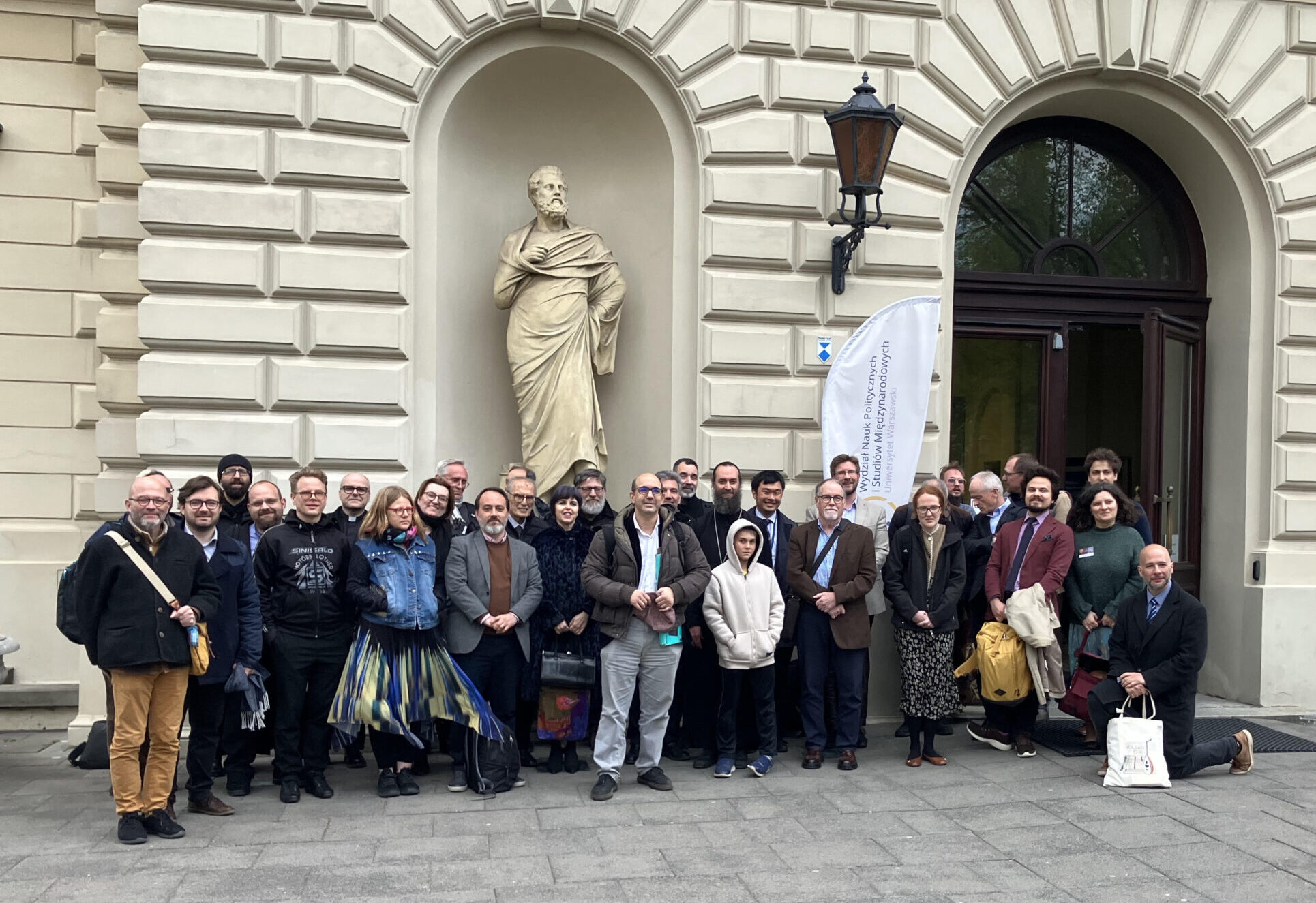
On October 23 and 24, 2026, scholars, theologians, and researchers gathered at the Thessalia Conference Center in Volos, Greece, for a timely colloquium titled “Orthodox Theology in the Public Sphere: Reclaiming a Credible Public Voice.” Directed and organized by the Volos Academy for Theological Studies—led by Dr. Pantelis Kalaitzidis and Dr. Nikolaos Asproulis—with the sponsorship of the International Orthodox Theological Association (IOTA), the event was further supported by the Holy Metropolises of Demetrias and Peristeri, Agape Hellas, and the Huffington Ecumenical Institute. The gathering confronted an urgent question: how can Orthodox theology meaningfully contribute to modern, pluralistic democracies without degenerating into either a nationalist civil religion or an isolated, self-referential ecclesial commentary?
Rather than offering a dry historical survey, the colloquium succeeded in stripping away institutional defensiveness to expose the most pressing geopolitical and ideological vulnerabilities facing contemporary Orthodoxy. A breakthrough of the discussions was establishing that the theological justification of state aggression—most notoriously seen today in the “Russki mir” ideology—is not a uniquely Russian aberration, but part of a broader, recurring historical pattern across the Orthodox world. Through rigorous comparative analyses spanning Ukraine, Bulgaria, Romania, and Greece, participants demonstrated how easily religious authority is compromised when aligned with ethno-nationalism, authoritarian regimes, and strongman politics. From the historical co-opting of educational traditions by imperial apparatuses to the lingering allure of interwar fascism in certain ecclesial circles, the workshop starkly illustrated how political entanglement distorts the Church’s mission.
Beyond political critique, the colloquium achieved an urgent internal diagnosis of the Church’s spiritual and intellectual health. Discussions highlighted how institutional rigidity and historical nostalgia often subvert the Gospel’s true intent. Participants successfully challenged the widespread habit of hiding behind fossilized proclamations, which frequently renders Orthodox social ethics a dead letter in modern public debate and obscures the Church’s fundamental accountability to humanity.
Crucially, the Volos colloquium moved beyond mere critique to map out a constructive path forward within the “post-secular” reality. By engaging contemporary political theory, the colloquium demonstrated how Christian faith can operate as a legitimate, non-coercive partner in democratic societies. A key achievement was the consensus around renewing dogmatic theology in particular so that it offers genuine existential meaning without succumbing to cultural leveling, alongside embracing an eschatological understanding of Tradition—one that looks forward rather than backward, equipping the Church to engage postmodernity creatively.
Ultimately, the workshop confirmed a sobering paradox: while Orthodoxy remains a potent cultural voice in the post-secular environment, its public messaging frequently drifts far from the core teachings of the Gospel. Looking ahead, the future of this vital conversation lies in moving from academic diagnosis to tangible ecclesial transformation. The next phase of this initiative should focus on cultivating a prophetic, socially accountable theology that actively resists authoritarian co-optation, fosters genuine dialogue with secular modernity, and champions human dignity and democratic pluralism over nationalist insularity.
Dr. Nikolaos Asproulis
Volos Academy for Theological Studies